
Tucson, AZ / Hard water
Tucson Hard Water and Mineral Scale in Home Cooling Systems
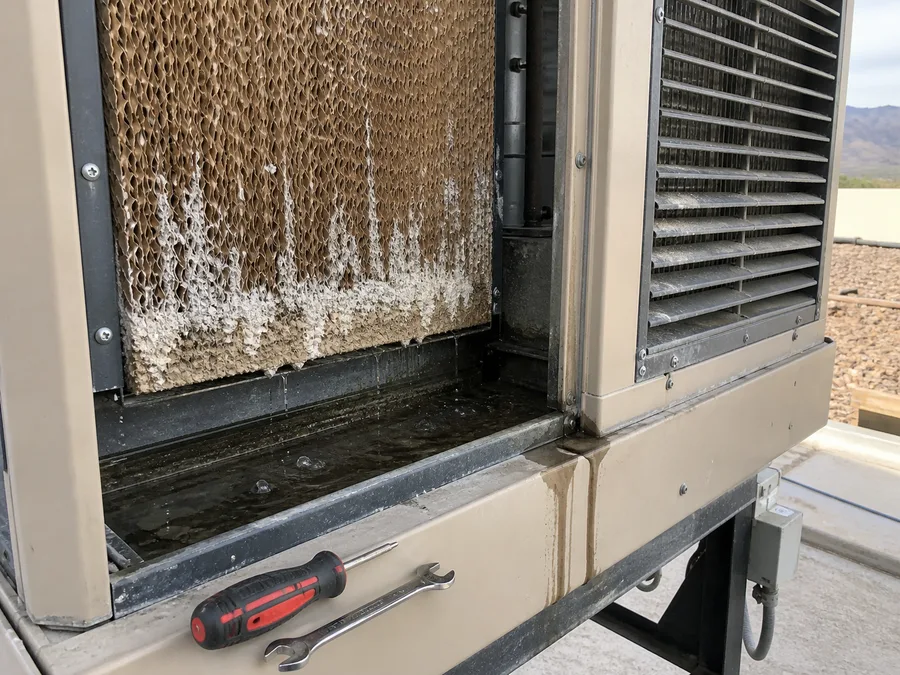
See how Tucson hard water can leave mineral scale on evaporative cooling pads, water lines, pumps, and reservoirs.
Hard water, monsoon humidity, spring dust, roof access, and freeze risk can all affect a swamp cooler. Use these resources to connect a local condition with the problem you are seeing.
Tucson, AZ / Hard water
See how Tucson hard water can leave mineral scale on evaporative cooling pads, water lines, pumps, and reservoirs.
If the cooler is already blowing warm air, leaking, or not turning on, call for help. Use the resources below when scale, humidity, dust, rooftop access, or seasonal weather may be part of the problem.
White crust, dry pads, clogged distributor lines, and reservoir buildup often start with local water conditions.
Evaporative coolers can feel different when a dry-climate city moves into a more humid part of summer.
Dust can collect around pads, grilles, and water flow before the first long stretch of heat.
Dry spring weather is the window to check pads, water flow, belts, and startup issues before peak demand.
Roof access, sun exposure, and water scale can change how a cooler is checked, cleaned, or replaced.
High-desert cities need seasonal shutoff, draining, and cover checks before freezing weather.
Use this when the house is getting hot, the cooler is leaking, or the fan runs but the air feels warm.
Have a symptom Read a problem guideUse this when you want to describe warm air, dry pads, weak airflow, leaks, pump noise, or cost questions.
Compare cities Compare hard water by cityUse this when mineral scale or pad clogging may be part of the problem.